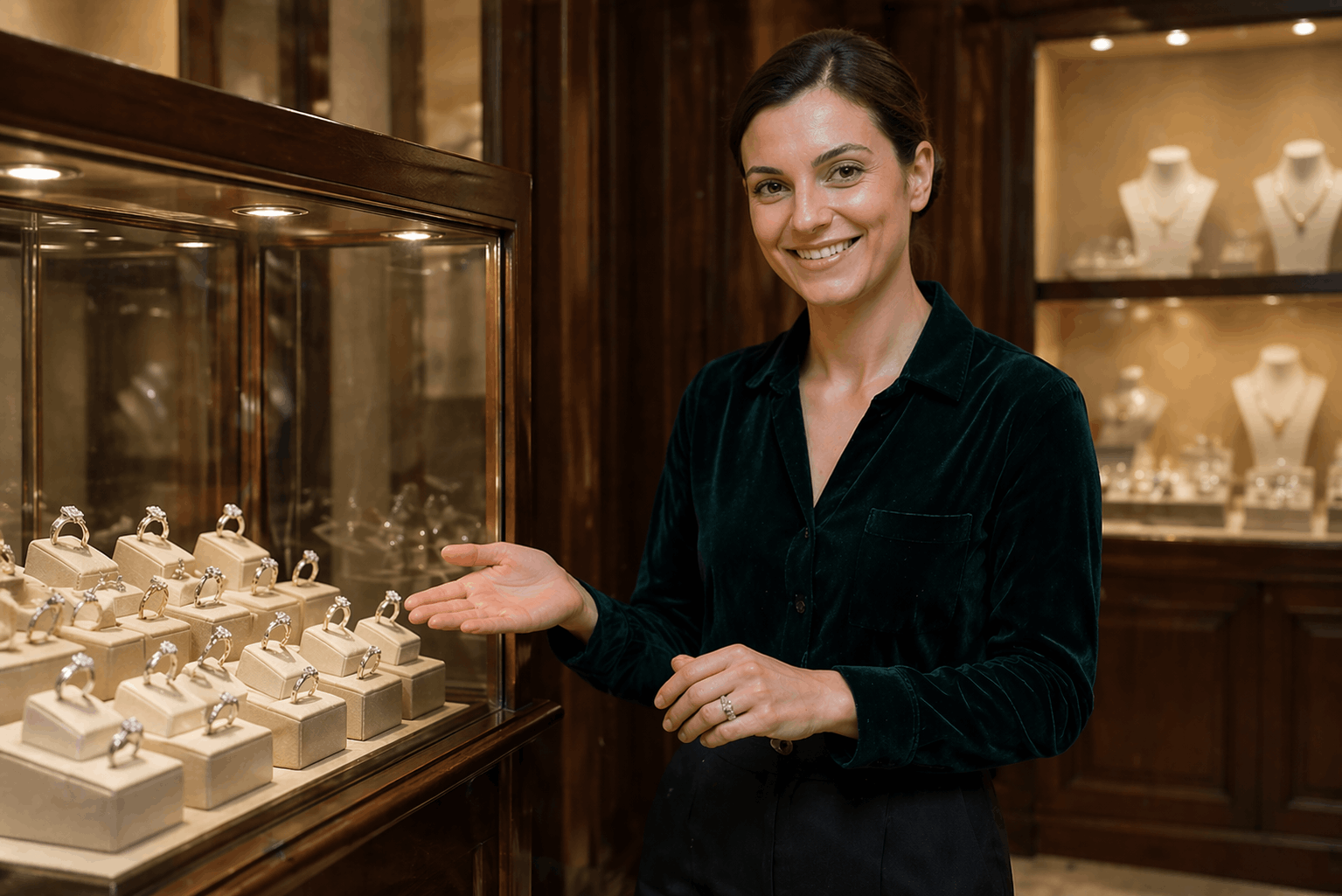
Customers are increasingly asking about lab-grown diamonds. For many jewellers, this is still a new situation in the sales conversation. This guide was created as a practical resource — showing how to handle the conversation simply, professionally, and effectively.
Why Customers Ask About Lab-Grown Diamonds
A customer who asks about lab-grown diamonds has typically:
- researched information online and in the media
- compared different options within their budget
- tried to understand the difference between stone types
- looked for the best solution — not the "cheapest option"
This is not a difficult customer. This is an informed customer who wants to make a good decision
How to Start the Conversation
The most common mistake: starting with technology.
Instead, start with the customer:
Instead, start with the customer:
- "What style of jewellery are you looking for?"
- "Do you have a specific budget in mind?"
- "What matters most to you when choosing a stone?"
Then move on to the explanation.
Most Common Customer Questions — and Ready Answers
Question: Are lab-grown diamonds real diamonds?
Answer: A lab-grown diamond has an identical structure to a natural diamond — the only difference is where it was created.
Question: Why are they cheaper?
Answer: The production process is more controlled and less costly than mining in nature, so the price is more accessible.
Question: Do they hold their value?
Answer: It is a fully genuine diamond used in jewellery — its value comes from quality and application in the piece.
Answer: A lab-grown diamond has an identical structure to a natural diamond — the only difference is where it was created.
Question: Why are they cheaper?
Answer: The production process is more controlled and less costly than mining in nature, so the price is more accessible.
Question: Do they hold their value?
Answer: It is a fully genuine diamond used in jewellery — its value comes from quality and application in the piece.
The simplest way to explain what a lab-grown diamond is:
Key: simplicity and confidence.
Key: simplicity and confidence.
- "It's a real diamond — it only differs in origin."
- "It has the same structure and properties as a natural diamond."
- "It's created in controlled conditions, which gives it very consistent quality."
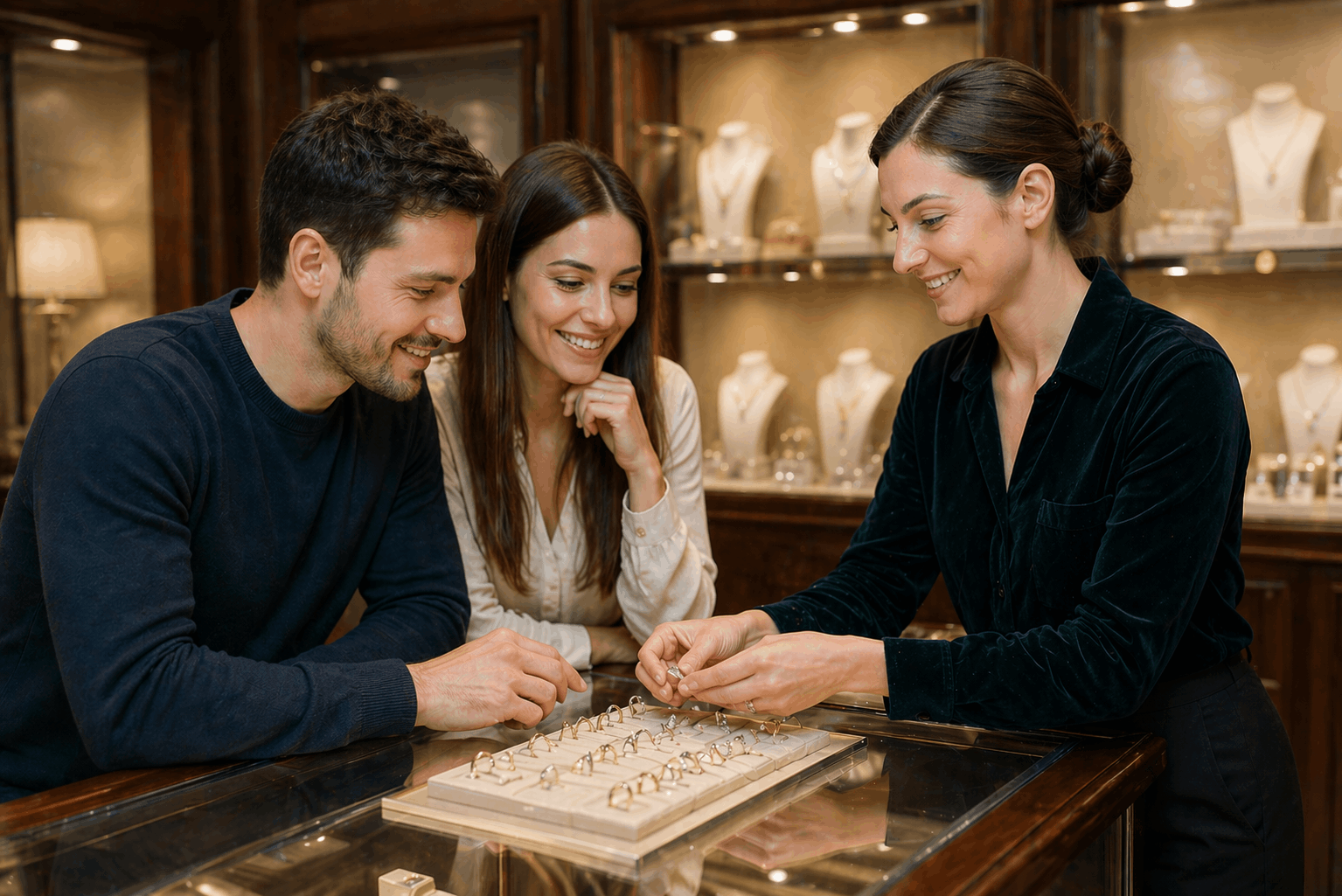
3 Arguments That Help the Customer Decide
1. A larger stone within the same budget The customer can choose a larger lab-grown diamond at the same price point.
2. A modern choice More and more customers are consciously choosing lab-grown diamonds.
3. Consistent quality Lab-grown diamonds are characterised by high parameter consistency.
2. A modern choice More and more customers are consciously choosing lab-grown diamonds.
3. Consistent quality Lab-grown diamonds are characterised by high parameter consistency.
What NOT to Say to the Customer
Simplicity builds trust.
- don't lead with technology straight away
- don't compare aggressively with natural diamonds
- don't assume the customer wants something "cheaper"
- don't overcomplicate your answers
Simplicity builds trust.
How to Build Trust in the Conversation
Trust is built through:
The customer doesn't want a lecture — they want a clear recommendation.
Trust is built through:
- calm, clear explanation
- confidence in what you're saying
- no sales pressure
- clear answers
The customer doesn't want a lecture — they want a clear recommendation.
Summary
Talking about lab-grown diamonds is now a standard part of a jeweller's work. It's not a trend — it's the direction the market is moving.
A well-handled conversation:
Talking about lab-grown diamonds is now a standard part of a jeweller's work. It's not a trend — it's the direction the market is moving.
A well-handled conversation:
- builds customer trust
- makes the buying decision easier
- increases sales